How you are able to taste a glass of wine and travel in your mind to the place where it began, recall the way the place looked in the Fall, the way the air smelled, the palpable energy of a vineyard bursting with fruit. Beer cannot do that, nor anything distilled. Walk a great wine estate and the wines produced there never taste the same again. Wine connects us to our senses, and to the places we’ve been, and the trajectory of our life. I know of nothing else that can make that connection. Wine grounds us on this beautiful planet. Maybe if the world had more wine drinkers, we wouldn’t have ruined it so carelessly.
ron washam, HMW

Showing posts with label wine. Show all posts
Showing posts with label wine. Show all posts
Thursday, March 17, 2016
liquid link


Friday, February 20, 2015
at henri milan

sebastien xavier is domaine milan's cellarmaster, and S&X is his personal cuvée (monocépage grenache noir).
Thursday, November 20, 2014
the magic is back

a bottle of frank cornelissen's contadino 4 from the 2006 vintage opened in new orleans in 2012 was one of my first conversion wines: a bottle that changed my mind about what we should drink and why we should drink it. ashy, fizzing, the colour of rhubarb stems, the scent of ripe crushed raspberries and cider, the flavour of basalt and cinders. it was a magic bottle, and each case of contadino would have, if you were very fortunate, a single magic bottle. (often it would have no magic bottles but many undrinkably acetic ones.) nonetheless, i lavished hard-earned doubloons on more contadino from various later vintages hoping to replicate that first experience. no luck. with each successive vintage, contadino remained a crazy patchwork long-macerated blend of red and white grapes but slowly became more extracted and stable. reliably tasty; no longer a catalogue of wine flaws with the potential to be confusingly and improbably delicious.
but the magic is back with last night's bottle of cornelissen's susucaru 6 (vintage 2013)—one of a pair which traveled from etna to cambridge ma to london, to be opened on the spur of the moment at the remedy. the other bottle was undrinkable but i drank it anyway. vive la variance.
Saturday, November 8, 2014
sous les pavés, la vigne

started in paris and now has sprouted an offshoot in lyon—which is like a smaller, much less crowded, prettier, cleaner paris, with more cream added. about 40 producers, which is just the right size to explore deeply over the course of two days. many were indifferent, some were good, but only a few were surprising. considering lyon's location, there was an inexplicable and regrettable absence of vignerons from the jura and savoie at this exposition.
sebastien poly's "damianu" (an unsulphured biodynamic old-vine sciaccarellu) was pure, bright, and lively with a hint of earth—it changed my mind about wine from corsica. and massimo coletti's "l'innominato" (an experimental undisgorged metodo classico made not from glera but a blend of manzoni rosso and manzoni bianco) was precise, crisp, and creamy—if more sparkling wine from the veneto tasted like this, i would like more sparkling wine from the veneto.
Sunday, August 17, 2014

Monday, July 28, 2014
wine nerd pals


one for the books: a hot, dry, london afternoon spent hydrating assiduously with fellow wine nerds under the umbrellas in the back garden at kandoo on the edgware road. lunch can stretch effortlessly over seven hours when there are many things to eat and drink* and much to discuss.
* j. lassalle, blanc de blancs brut 2002; cedric flaction, païen 2010; immich-batterieberg, escheburg 2012; schloss neuweier, goldener loch GG 2012; clos de la marechale, NSG 2010 and 2011; ch. grand-puy-lacoste, pauillac 1988; casa pardet, tempranillo reserva 1995; julien frémont, pur pom 2009; cold-brewed assam tea.
Monday, May 19, 2014
weinland

a special edition weinland gummi pack for the homeland of haribo. the mosel, rightly, is pale and transparent, while the rhein is appropriately yellow. but the landwein of main are nothing like the pure wines of the saar, yet the saar gummi and the main gummi look and taste identical. this special edition gummi pack raises more questions than it answers.
Sunday, May 4, 2014
a book by its cover

read the label, know the wine. it is hard to acquire the skill and wisdom necessary to work with the material while resisting the temptation to do or add more—and still make good, good-humoured wine. in a different domain, james krenov comes to mind.
"Produced without harming man or the land. I develop my wine with the grapes, by observing and understanding nature."
this is what the industrial wine complex does with such a winemaker.
Tuesday, October 22, 2013
inversions
from anjou and the ardèche. the same, but very much not the same.


1) "ça faye douze" from philippe delmée in anjou, 2012 vintage. a VDF from cabernet franc, cabernet sauvignon, grolleau noir, pineau d'aunis. on opening, it was frothy from a tiny bit of bottle fermentation; there might have been volatile acidity too. it reminded me of what envol de la fille is like when first opened: light in texture, high-toned bright acidity, juicy berries, a crisp and lightly crunchy tannic profile. but with the leafiness and pepperiness of young cabernet franc (bell pepper) and pineau d'aunis (peppercorns). i could not tell what the cépage was from drinking it, but then i never can tell these things. it was the most perplexingly lively, joyous wine imaginable; a wine to make you smile and take another gulp. i saved much of it to see what would happen after a cold, slow airing. turns out, this wine is toast by day 2. the day after, it was not undrinkable but i wouldn't have gone back for a second glass.
2) "l'epicurien" from gregory guillaume in alba-la-romaine in the ardèche meridionale, 2012 vintage. 100% grenache from what i usually think of, apparently inaccurately, as syrah country. on opening, it was undelicious, with a pronounced funk and a bit of effervescence. i closed it up after a glass and left it in the fridge to air out slowly. on the second day, it was a different wine. slightly ashy with a fuzzy raspiness, it had all the good bits of the earlier cornelissen contadinos. the fruit was intensely present with a lazy sort of freshness just sufficient to stay interesting and not to tire. on the fourth day, it became bizarrely delicious: fresh strawberries, very soft tannins, and—at the very end of every sip, just after the swallow—the delicate puff of intense cherryskin aromatics that drift up through the sinuses and prolong the experience.
Monday, October 7, 2013
drinking high and low

the beck's you already know about for its quenching quality and sweet malty lageriness. the 2004 vintage of martin müllen's krover letterlay spätlese riesling is what's currently available on the UK* retail market and is considerably less expensive than numerous rieslings that are significantly less delightful. it is thoroughly mosel in the nose—delicately ripe peaches—round and substantial, yet light in the mouth and with apparent (but i think almost no actual) sweetness. when unpacking, it is critical to remain thoroughly hydrated in order to not become disoriented among the mountains of newsprint.
* i've moved to london, fyi. and the müllen wines are only available in london through david motion's quite fine wine store, the winery, located conveniently close by.
Saturday, August 17, 2013
the scallop reveal

chopsticks peel back a flap of raw scallop to expose an avocado cube, scallop roe, a shaving of not-overripe mango, and a drop of pique—a class of fruit and chili vinegars from puerto rico: new style, new world crudo with the finesse of old-school sashimi, from saison. before, a little bowl of egg custard, topped with gently cooked turnip slices and a tiny ball of wrung-out shungiku. and after, a barely warmed piece of lamb dry-aged for 60 days, lying on a pile of minted grilled eggplant and salt-cured lemon filled with the mediterranean scent of fire, scrub, and preservation.
go for the first courses, the fish, the furniture, and the extensive collection of exquisite glass and ceramic servingware. note: for those who have not yet exited their startups, the wine list may prove hard to swallow.
Saturday, June 29, 2013
the worst
lyle fass pulls no punches:
The worst wine in the world has to be really bad Pinot Noir from Burgundy. Thin, stewey, vegetal, green, almost like drinking a puddle, with no finish and weedy. Truly like they got all the dirt, hay and moss and liquified it and added like one small cherry, dyed it red, slapped a label on it and that was that.it is a good thing to have an opinion.
Saturday, May 11, 2013
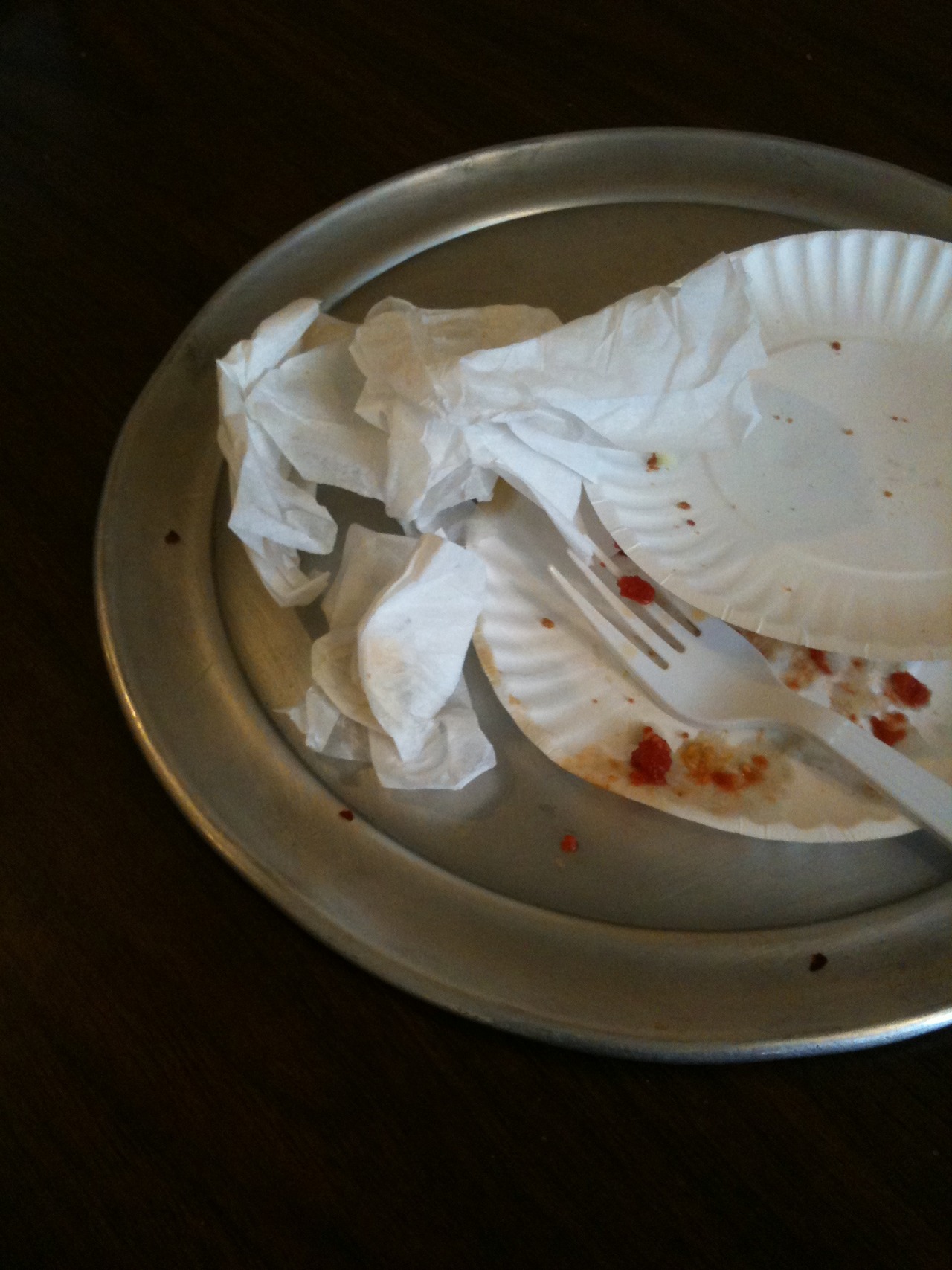
4-napkin snack
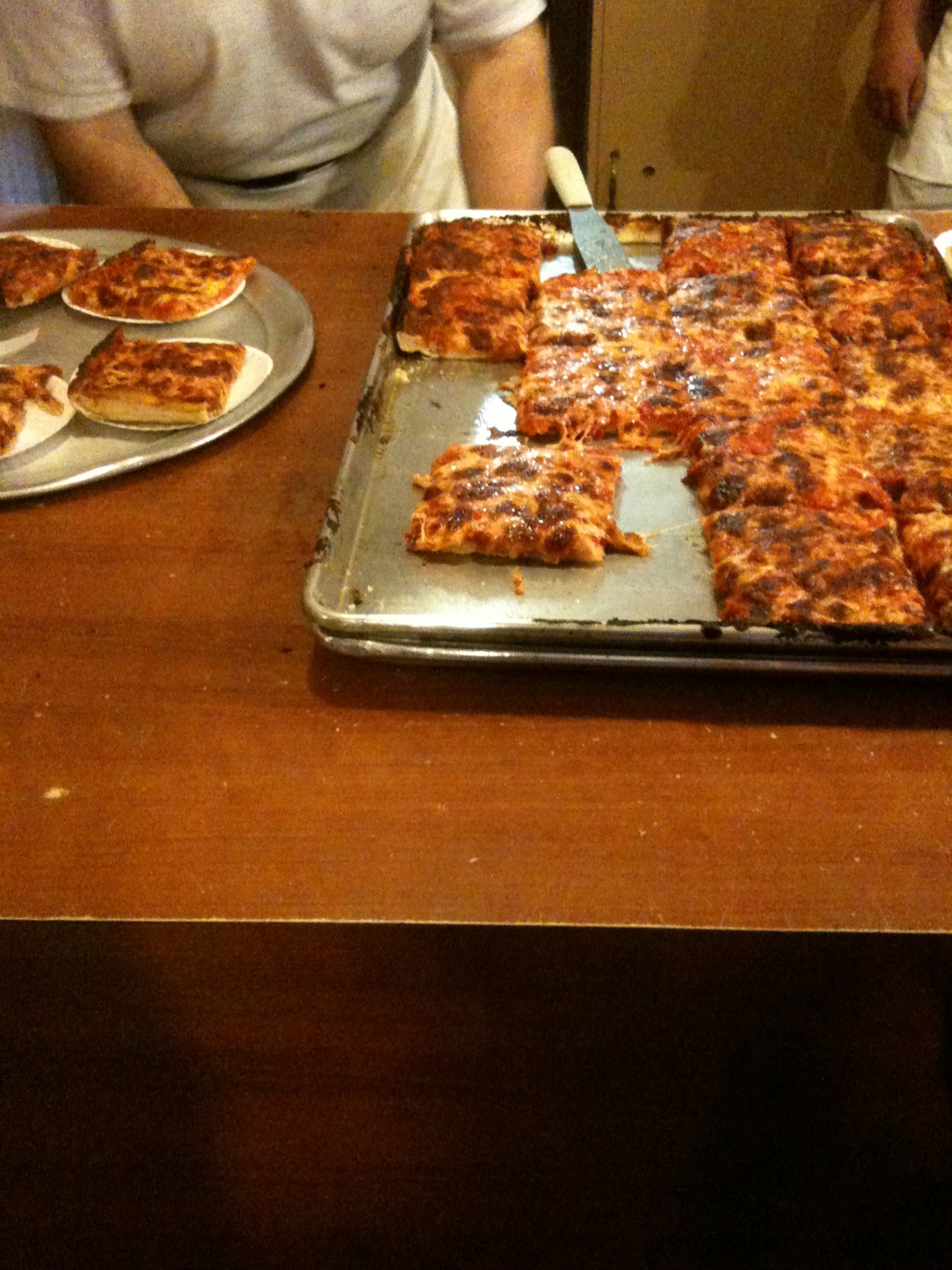
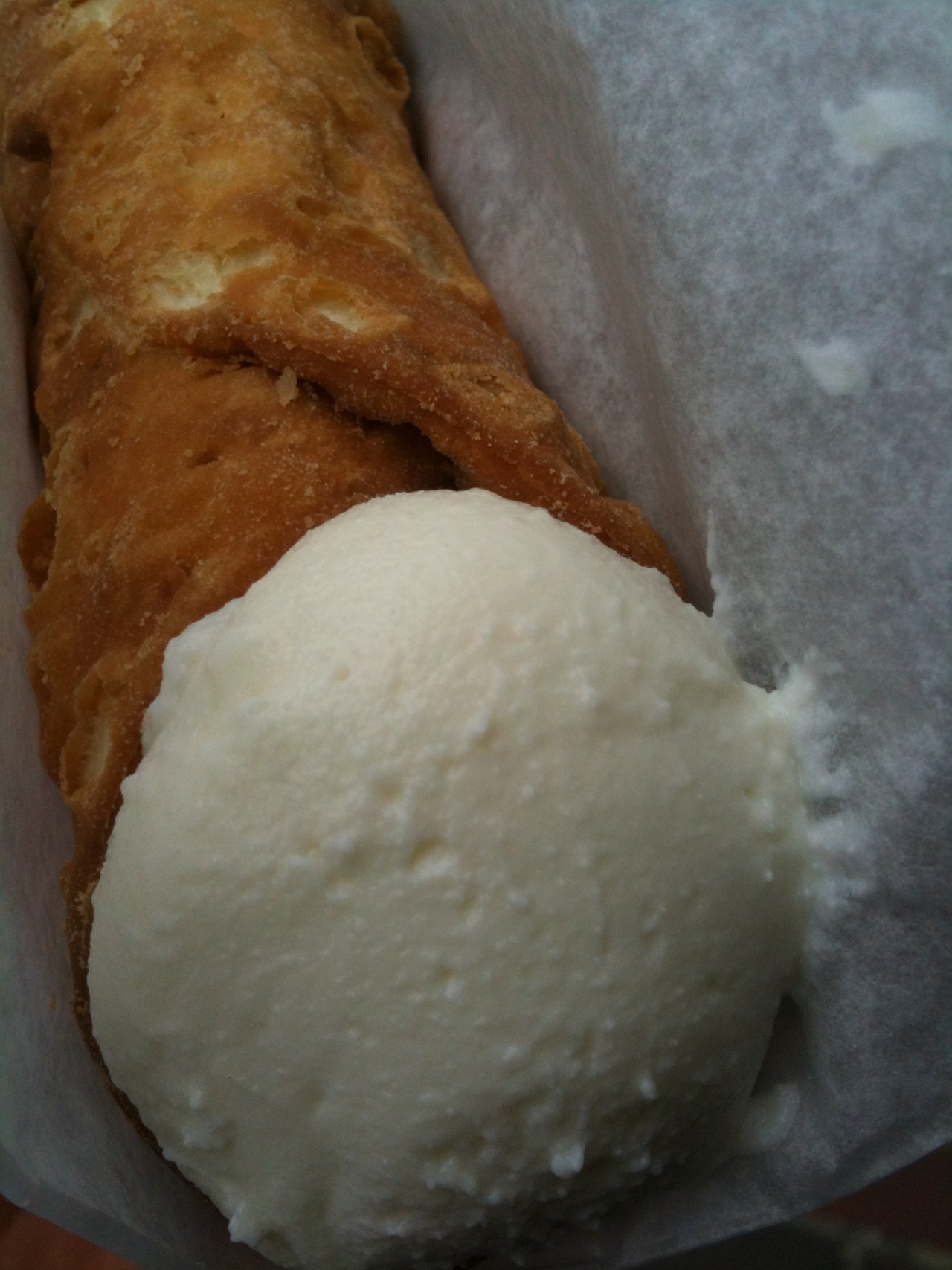
i took my bike over to the north end today to spend a lot of someone else's money on wine—which is the best way to do it. but before that, a slice and a panzarotto (potato variant) at umberto, and a plain cannolo, no icing sugar, from modern.
also, public interest announcement: the la clarine "sumu kaw" syrah and piedi grandi (nebbiolo, syrah, and mourvedre) are available at the wine bottega.
also, public interest announcement: the la clarine "sumu kaw" syrah and piedi grandi (nebbiolo, syrah, and mourvedre) are available at the wine bottega.
Monday, February 18, 2013
c'est la plante et non la chimie qui fait le vin*
Everyone agrees that the magnificent wine he makes is better than the neighbours'. There are many reasons for this, one is that nothing is put in it, medicaments I mean. An artist who has taken risks all his life accepts the risk of his wine "going off" and only takes the more care of his barrels. The agriculturalist spoils his wine by "making sure."*
patience gray, honey from a weed
Wednesday, February 13, 2013
great wines are worth waiting for
Genius is a combination of instinct and reason married to an unswerving dedication to a high standard. The expression of genius requires a certain obstinacy and the strength to be alone.
...The most profound satisfactions often come in small increments that gather strength as they accumulate. In the realm of wine, the critical components of attaining top quality are the soil, the composition of which is created over millennia; the climate, which builds moment by moment through a growing season; the vine itself, which gives its best and most concentrated juice when it is older; and the daily tasks of tending the vineyard, none of which can be replaced by some trick or maneuver of winemaking. Much like us, a fine wine expresses its identity over time, and great wines are worth waiting for.
Tuesday, January 15, 2013
patience's reward

while i was in new york a few months ago, alice feiring mentioned that she'd come across some deeply discounted bottles of pinot noir and riesling from domaine binner at brookline liquor mart. when tory asked if i wanted a ride to BLM on saturday, i seized the opportunity to pick up as many of the binners as i could find. while i was there, i noted many fairly old bottles of wines i would like to buy and almost no new ones. perhaps the BLM demographic is shifting. in any case, i also snagged many bottles brought in by jenny and francois that were priced to move and a few cut-price bottles of single vineyard syrah from the berkeley garagiste winery a donkey and goat.
binner is a no-sulphur biodynamic viticulture native yeast winemaker. these types of wines can be divisive: i find they range unpredictably from undrinkably flawed to fascinatingly weird to transcendently gorgeous. it is difficult to bring one of these wines to a party unless the other drinkers are natural wine nerds or extraordinarily polite.
which is a fine excuse to open a bottle before starting to write a new chapter. as soon as the cork popped free, a miasma of perfume, the stench of those giant spotted lilies that seem to show up in every funeral floral arrangement, erupted from the bottle. the reality is only a little less dramatic than that: the room smelled of lilies for hours. i vigorously aerated a glass of the stuff but the lilies would not go away. it was tannic and off-balance, undrinkable. the colour in the glass—a pale brick— suggested advanced age, but BLM had told me that the bottles had been stored for almost a decade at the bottom of a stack of cases in their climate-controlled warehouse. i resealed it and stuffed it in the fridge.
the next night, you can imagine my surprise on pouring a glass: the lilies had totally vanished and the wine was in fact becoming quite lovely. it had a light funkiness but smelled mostly of red and sour cherries and a bit of sugar. the wine was nearly totally dry but had an apparent sweetness from the fruit, and the acid had balanced itself out overnight. not only drinkable but deliciously drinkable. in the interim, i'd sent a few emails out to my wine advisors, none of whom had experienced anything like this before. a post on a wine bulletin board (remember those from the dawn of the interweb?) attracted some comments that suggested that these odd aromas might be a characteristic of binner wines and identifying some of the characteristic aromatic molecules in lilies as lower terpenes.
fast forward to 20 minutes ago, when i poured the last of the bottle. it is now a seriously beautiful wine: light-bodied but persistent, smelling of just-ripe cherries. only one bottle of the binner pinot left, but this is more evidence of a pattern i've noted of low-sulphur, native yeast wines needing long periods (sometimes many days) of cold airing to show well—for instance, brignot's envol de la fille (lovely to start, more lovely on day 5) and some of gahier's jura chardonnays (undrinkable to start, beautiful on day 3), and a lapierre 2010 morgon (brilliant on day 4). and it isn't just that off-aromas are blowing off; the perceived flavour and acid balance of the wine change as well.
a topic for further inquiry, and a call (as if we needed one) to return to a slower way of drinking wine.
Thursday, December 6, 2012
all roads

it is my too-infrequent good fortune to be invited to home-cooked dinners with Pyrrhic guest lists, the kind filled with people whose discernment and taste are a source of pleasure and knowledge but are, by the same token, so refined that any attempt to contribute something to the table is an endeavour perilous to the ego. on these occasions, i sit in the corner taking notes, harmless, my ethnographic field training serving me well.
these are lovers of wine and the generous table who have been drinking widely, wisely, and secreting things away in their cellars for decades. tuesday night's table—small and richer than usual in fellow convivialists—was conducive to each person bringing interesting, delicious bottles, sometimes bottles quite a bit older than anyone without a cellar or an inheritance gets to drink. a magnum of bouzy champagne grower camille savès's carte blanche, a leoville-barton (1989), a pauillac (i forget the producer) from 1975, a hochheimer domdechaney riesling (1993), two rieslings from the late 1970s, a clos des couchereaux from jadot (1996, and with some years left in the bottle yet), and an unusual botrytised gruner veltliner from knoll (2004). i think a 2004 rebholz weissburgunder from im sonnenschein. there were others too.
over dinner, this country mouse pondered the opinion, voiced by some (though not many at the table), that "all roads lead to bordeaux." the leoville-barton was quite beautiful and surprisingly austere, with the characteristic green hatch chile fragrance; the pauillac was rich, soft, velvety, but with grip and power. contradictions are one source of complexity. you can see why captains of industry drink this stuff.
but: is bordeaux the telos of wine? maybe it's a matter of time but not for me, now. that clear, austere, cool burgundy, even before it finally opened up in the dregs of the bottle at the end of the night, was the one i poured myself when all eyes were on the potatoes. they were very good potatoes.
Subscribe to:
Posts (Atom)